A Word from our Director, Dr Kevin P Stenson
- 29th Jun 2026
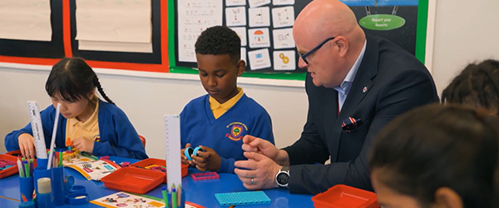
Recently I had the pleasure of visiting St Catherine of Siena Catholic Primary School in Birmingham to meet a class taking part in RAF Youth STEM’s STEM-in-a-Box programme, which is enabled by a Trust grant. In the classroom, I met bright and wonderfully curious children getting hands-on with STEM using LEGO to make space rovers, and their teacher, Mr Woolman, who challenges children to see STEM as the all-encompassing force that has and will continue to shape the world around them, instead of a subject trapped to the confines of a classroom.
My time in the Midlands with Mr Woolman made me reflect on the inspirational and influential role teachers play in shaping the lives of young people, myself included. As the youngest child of immigrants, growing up in the 1980s my heroes came from Manchester’s world beating football and music scenes (when we meet, I am happy to explain why it’s the best city in the world!). Reflecting 40 years later, evidence links the role parents, context and teachers play in young peoples’ aspirations and future outcomes – and that is where Mrs Lister changed my life by giving me the confidence that chemistry was for me, and that it offered a path, if followed, would lead me to a rewarding career. I was fortunate really, as I am too left footed and can’t sing!
Aged 14, the age at which both my parents left school, chemistry sparked my curiosity and saw the periodic table become the LEGO set that built the world; everything from TCP to PVC and PCBs came to life when viewed through this lens. Mrs Lister helped me compound my natural curiosity and interest in chemistry, resulting in a life-long passion for and career in STEM. Since leaving school in 1990, I have been lucky enough to study chemistry at both a degree and doctorate level which, in turn, led me to collaborate with some incredible people and organisations carrying out life changing work. I say lucky, as whilst my parents expected me to follow the same YTS pathway trodden by my older brothers, they allowed their youngest child to continue in education, instead of seeking employment or training.
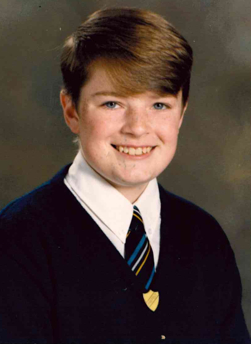
My parents would have been very mindful in the late 1980s and early 1990s that their children were all fortunate to be in education, employment or training. The Government of the day were the first to introduce the term NEET (Not in Education, Employment or Training) which described the then ca. 10% of young people impacted by recession, manufacturing decline and youth unemployment.
This train of thought takes me to former Cabinet member Alan Milburn’s publication of the first part of his Government-commissioned Young People and Work: Interim Report, identifying the number of young people who are NEET today. The number stands at 1.01 million, 13.5% of those aged 16 – 24, and the first time the number has exceeded 1,000,000 since 2013. Whilst saddened the NEET number continues to fluctuate in line with economic cycles and the associated opportunities for young people in each generation, it is pleasing that young people are recognised not to be the problem (more the structural barriers they face including, unequal educational opportunities, declining entry-level jobs and family disadvantage). The report’s findings mirror my own research and experience developed over 25 years leading STEM education charities, namely that young people lack opportunity, not ambition, earlier interventions are the most effective, employer engagement is crucial, as is the role played by social mobility.
There is an additional challenge faced by the current generation. I am a product of the third industrial revolution, which followed a century behind the second, which in turn had followed a century behind the first. My children were born during the fourth industrial revolution and will enter the workplace, I hope, during the fifth. They will be part of a generation that works through multiple waves of technological change, underlining one of the recent NEET report's most significant conclusions - the challenge is no longer simply to prepare young people for jobs that exist today, but to equip them for opportunities they can realistically access tomorrow. The labour market is becoming more competitive, more technologically advanced and more reliant on higher-level skills, making early exposure to STEM, meaningful employer engagement and the development of essential skills more important than ever. This, in conjunction with growing awareness of a skill shortage surrounding Defence and an anticipated increase in spending within the industry, leading to an estimated 50,000 more Defence jobs by 2034, offers a pathway to a solution with so many talented young people currently needing direction.
For the RAF Charitable Trust, this provides a strong evidence base for investing in programmes that combine STEM inspiration, essential skills development, employer engagement and clear pathways into careers in air, space, defence and technology, directly addressing many of the structural barriers identified in the report.
Our commitment to our cause must not be dampened by the huge disappointed that our Company will not be delivering and inspiring young people at the Royal International Air Tattoo this year. The Trust’s work transcends what the airshow can achieve alone, by helping young people across the UK to unlock their potential and in doing so access the education, employment and training they deserve, all whilst helping to address the risks facing the UK’s Strategic STEM capability and national defence.
As someone who has been inspired by STEM since a child, it fills me with both personal and professional pride to be spearheading the work of the Royal Air Force Charitable Trust, which I truly believe has never been more important.